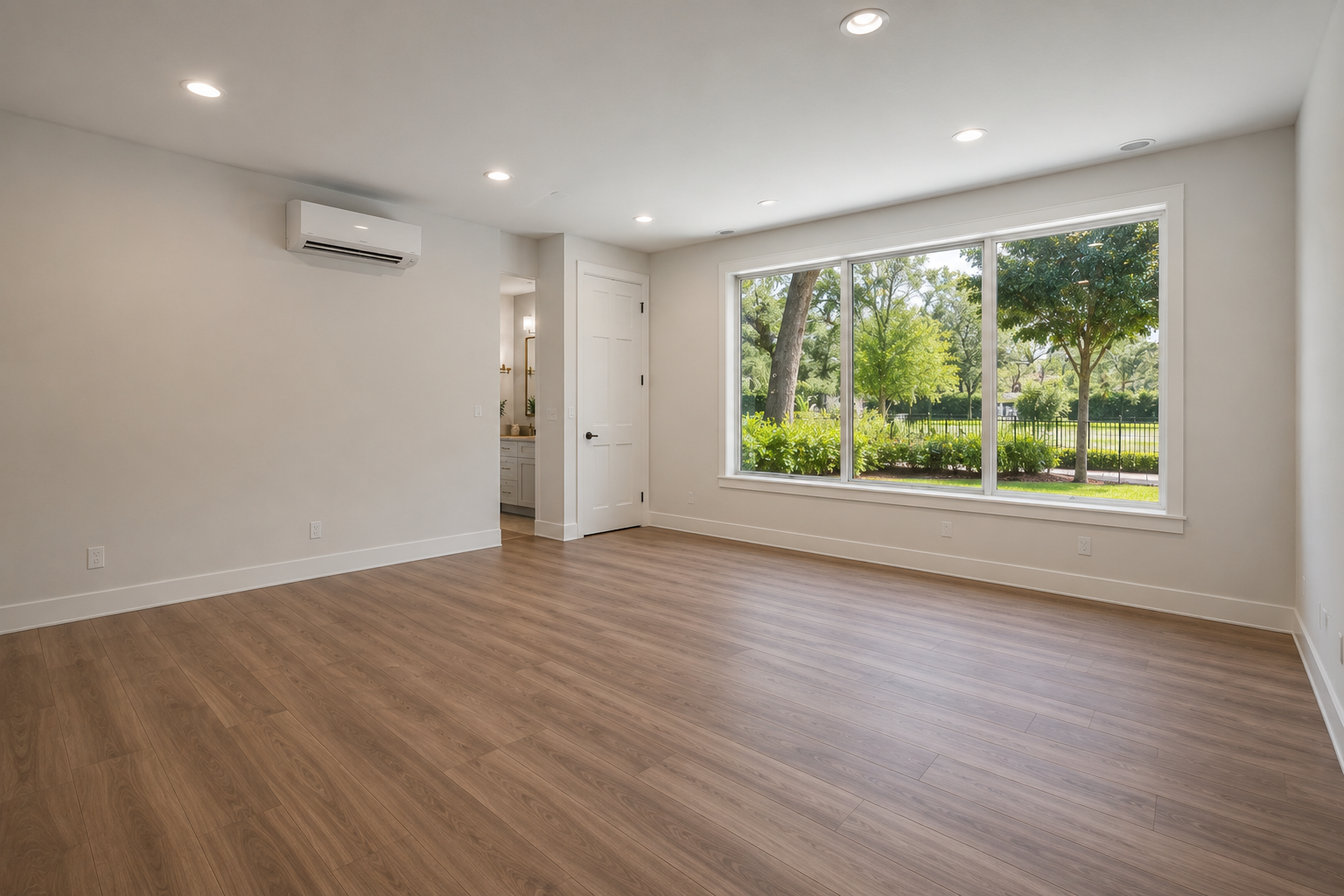

Garage Conversion to Living Space in Orlando: What It Costs and What Florida Code Actually Requires
Converting a garage into livable square footage is one of the more cost-effective ways Orlando homeowners add usable space without expanding the footprint of their home. It uses existing foundation, existing walls, and an existing roof. On paper, it sounds straightforward. In practice, it involves more code compliance work than most homeowners expect, and the decisions made early in the process determine whether the finished space adds real value to the home or creates problems at resale.
What Makes a Garage Conversion Different from a Standard Addition
A garage was built to different standards than conditioned living space. The slab is typically lower than the interior floor level. The walls may not be insulated, or insulated to a standard that does not meet Florida Energy Code for habitable rooms. There is no HVAC supply or return. The door opening is oversized for vehicles and does not meet residential egress standards. The electrical is minimal, usually a single circuit for a garage door opener and a couple of outlets.
All of that has to be brought up to code before Orange County or the relevant municipality will issue a certificate of occupancy for the converted space. This is not optional work. An unconverted garage listed as finished living space on a real estate listing without a permit and CO is a liability that buyers, lenders, and inspectors catch quickly.
What Orlando Homeowners Use Converted Garages For
The most common uses Magnet Remodeling sees in Orlando are guest suites, home offices, in-law spaces, and rental units. Each one has different implications for how the space needs to be finished and permitted.
A guest suite or in-law space typically requires a full bathroom addition, which triggers its own plumbing permit and waterproofing requirements. A rental unit may require a separate electrical meter depending on the municipality and whether it qualifies as an ADU under Orange County zoning. A home office is the least complex from a code standpoint but still requires proper insulation, HVAC, and egress compliance.
Knowing the intended use before design begins changes the scope and the permit path.
Florida Building Code Requirements for Garage Conversions
Florida Building Code applies to all garage conversions in Orange County and surrounding municipalities. The key requirements that affect cost and design are the following.
Floor elevation. Garage slabs are often four to eight inches lower than the interior floor of the home. Code requires the converted space to meet the same floor level as adjacent habitable rooms, or have a compliant transition. This typically means a sleeper floor system or self-leveling pour over the existing slab, both of which add cost and reduce finished ceiling height slightly.
Insulation. Garage walls and the ceiling or roof deck must meet Florida Energy Code R-value requirements for conditioned space. In most Central Florida applications, this means adding insulation to walls that previously had none and potentially upgrading the roof assembly above the space.
HVAC. The converted space must be connected to the home’s HVAC system or served by its own unit. An HVAC load calculation is required to confirm the existing system has capacity, or a new mini-split system is specified. In Florida’s climate, undersized HVAC in a converted garage creates humidity and comfort problems within the first summer.
Egress. The garage door opening must be replaced with a code-compliant wall assembly. If the converted space is a bedroom, it requires an egress window meeting minimum opening dimensions under Florida Building Code section R310.
Electrical. A garage conversion requires a full electrical permit. New circuits are added for general outlets, lighting, HVAC, and bathroom if applicable. Existing garage wiring typically cannot be reused as-is.
Fire separation. If the garage shares a wall with the main house, that wall was originally required to have a fire-rated assembly. Converting the garage to living space changes how that wall is treated under code, and the assembly must be reviewed as part of the permit package.
What Does a Garage Conversion Cost in Orlando?
A basic garage conversion to a non-bathroom space such as a home office or gym runs $40,000 to $70,000 in Orlando when done with permits and to code. That range covers floor system, insulation, drywall, HVAC, electrical, new exterior wall where the garage door was, windows, and finishes.
Adding a full bathroom brings the range to $65,000 to $110,000 depending on finish level and plumbing routing distance from the existing stack. Adding a kitchenette for an in-law or rental configuration adds another $15,000 to $30,000 depending on whether a gas line is involved.
These numbers assume a standard two-car garage of approximately 400 to 500 square feet. A single-car garage conversion costs less but also produces a smaller finished space that limits its functional use.
Does a Garage Conversion Count as an ADU in Orange County?
It can, depending on the configuration and the zoning of the property. If the converted garage includes a bathroom and kitchen and functions as an independent dwelling unit, Orange County zoning may classify it as an accessory dwelling unit. That classification brings its own set of requirements around setbacks, owner-occupancy rules, and utility connections.
If you are converting a garage with the intention of renting it as an independent unit, this needs to be part of the planning conversation before permits are pulled. Building it as a guest suite and renting it as an independent unit without the right classification creates compliance exposure. Magnet Remodeling works through the home additions and ADU planning process with homeowners from the beginning to make sure the permit path matches the intended use.
The Garage Door Opening: Your Biggest Design Decision
What replaces the garage door opening defines the exterior appearance of the conversion more than anything else. Options include a full stucco wall with windows matching the home’s existing window style, a wall with a single entry door and flanking windows, or a wall with a large picture window or sliding glass door for a more open feel.
In Orlando’s older neighborhoods, matching the stucco texture, color, and window profile of the existing home is important for both aesthetic reasons and HOA compliance. A conversion that looks like a converted garage from the street affects curb appeal and resale differently than one that reads as a natural part of the home’s facade.
This is a design decision that benefits from the kind of integrated planning that a design-build approach provides, where the architect and builder are working from the same set of drawings and the exterior finish is planned alongside the structural and mechanical work.
What Magnet Remodeling Handles on a Garage Conversion
Magnet Remodeling manages garage conversions in Orlando as a fully permitted, design-through-build project. That includes the floor system, insulation, HVAC, electrical, plumbing if a bathroom is included, exterior wall replacement, interior finishes, and the full permit process through Orange County or the applicable city department.
If you are considering converting your garage into usable living space, request a free estimate and we will walk through what your specific garage configuration, lot, and intended use require before any commitments are made.