
Adding a Bathroom to a Home Addition in Orlando: Costs, Plumbing, and Florida Code Requirements
Most homeowners adding square footage to their Orlando home want a bathroom in it. Whether it is a guest suite, an in-law addition, or a primary bedroom expansion, a bathroom is what makes the space fully functional and livable. It is also what makes the addition significantly more complex from a construction standpoint.
This article covers what adding a bathroom to a home addition actually involves in Orlando, what it costs, what Florida building code requires, and where projects run into problems when this part of the planning is underestimated.
Why a Bathroom Changes the Entire Addition Project
A bedroom addition is largely a framing, roofing, insulation, and drywall project with electrical. The moment you add a bathroom, the project scope changes. You now need new plumbing supply lines, drain lines tied into your existing sewer or septic system, waterproofing, ventilation, a dedicated electrical circuit for GFCI outlets, exhaust fan requirements, and in many cases a water heater capacity review.
Each of those systems requires its own rough-in phase, its own inspections, and its own coordination with the overall build sequence. In Florida’s humid climate, the waterproofing and ventilation requirements are particularly strict because moisture damage happens fast and hides inside walls until it becomes a structural problem.
Getting this right from the start is the difference between a bathroom that lasts and one that costs significantly more to repair five years later.
What Does It Cost to Add a Bathroom to a Home Addition in Orlando?
In Central Florida, adding a bathroom to a home addition typically costs between $30,000 and $80,000 depending on the size of the bathroom, the distance from existing plumbing, the finish level, and whether the addition requires a new drain line run to the main sewer.
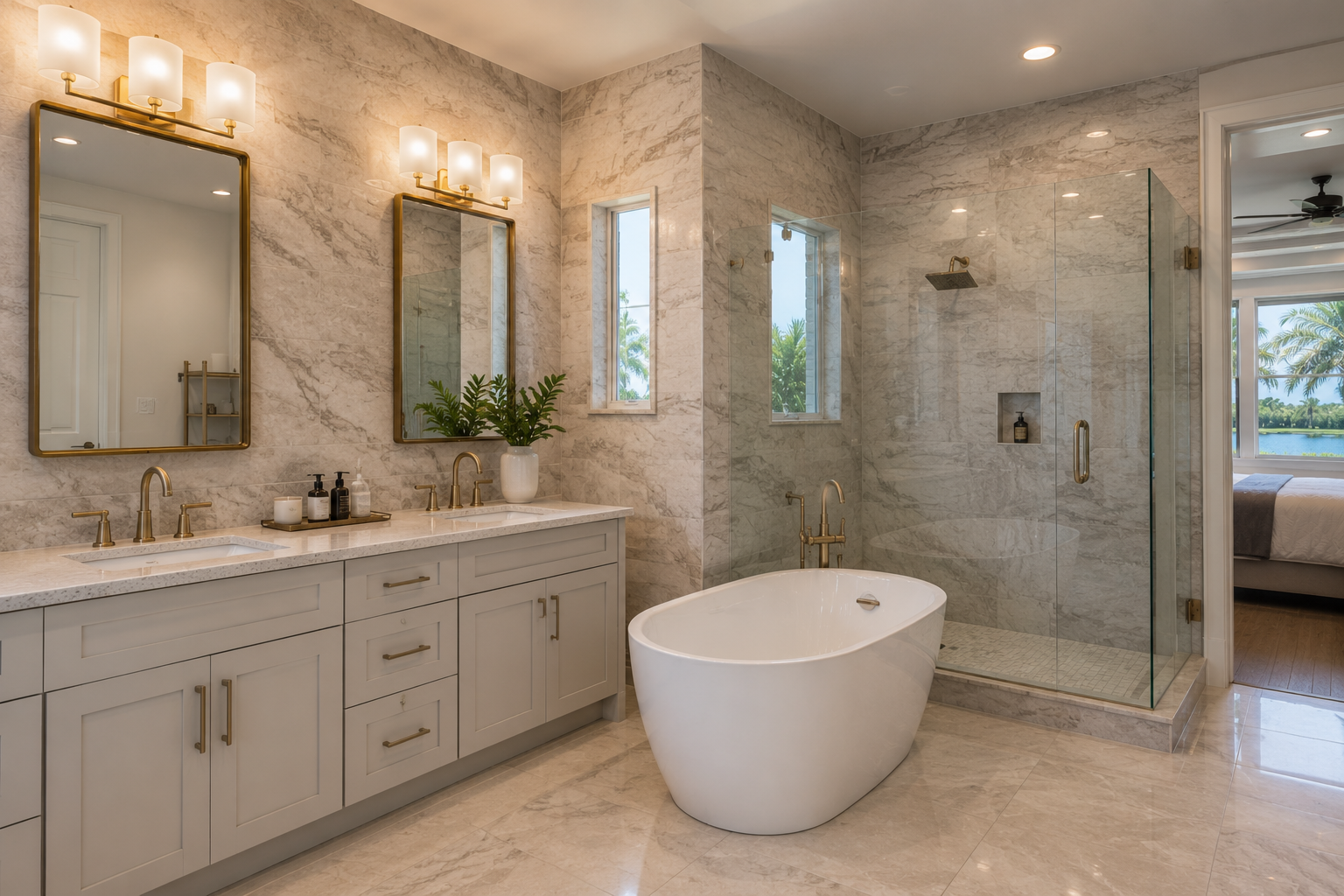
A half bath with toilet and sink at the lower end of finishes runs closer to $20,000 to $30,000. A full bathroom with a shower or tub, double vanity, and mid-range finishes sits in the $35,000 to $55,000 range. A luxury ensuite with a freestanding tub, frameless glass shower, heated floors, custom tile work, and premium fixtures can exceed $80,000 within the addition budget.
These figures are for the bathroom component within an addition. They do not include the base cost of the addition itself, which covers foundation, framing, roofing, exterior walls, insulation, and HVAC extension.
The Biggest Cost Variable: Plumbing Distance
The single factor that surprises homeowners most is how much the distance from the existing plumbing stack affects the bathroom cost. Every drain in your home runs by gravity to a central stack and then to the sewer line or septic tank. A bathroom added close to that existing stack is straightforward to connect. A bathroom added to a far corner of a new addition requires a long drain line run, potentially with a cleanout installation, and sometimes a pump system if the grade does not allow for proper slope.
In Orlando’s flat terrain, this is a real consideration. A qualified plumber and builder will assess your existing drain layout during planning to determine the most efficient and code-compliant routing before any ground is broken.
Florida Building Code Requirements for Addition Bathrooms
The Florida Building Code sets specific requirements for any new bathroom construction. Understanding these upfront prevents design decisions that have to be reversed during permitting.
Ventilation. Every bathroom in Florida requires mechanical ventilation if there is no operable window. An exhaust fan must vent directly to the exterior, not into the attic. This is a common code violation in DIY and poorly managed projects and will fail inspection.
GFCI protection. All outlets within six feet of a water source require GFCI protection. This is standard in any bathroom but is frequently missed when electricians are coordinating around a larger addition project.
Waterproofing. Shower and tub areas require a continuous waterproofing membrane behind the tile substrate. Magnet Remodeling installs the Schluter waterproofing system on all bathroom remodels and addition bathrooms, which carries a lifetime warranty and meets Florida code requirements.
Minimum clearances. Florida code requires minimum clearances around toilets, vanities, and shower entries. A bathroom planned without these dimensions in mind can get redesigned at the permit review stage, which costs time and money.
Septic capacity. If your home is on a septic system rather than municipal sewer, adding a bathroom may require a septic system evaluation and potentially an upgrade. Orange County Environmental Protection requires that septic systems are sized for the number of bedrooms and bathrooms in the home. Adding a bathroom can trigger this review.
Attached Addition vs Detached Structure: Plumbing Implications
Some homeowners add a detached structure on their property, such as a pool house or guest cottage, and want a full bathroom in it. A detached structure with a bathroom is treated differently than an attached addition under Florida code. It requires its own electrical sub-panel connection, a separate plumbing run from the main house or an independent connection point, and in some jurisdictions, a separate permit application.
If you are considering a detached addition with plumbing, this needs to be part of the design conversation from the beginning. Running plumbing underground across a yard adds cost and complexity that an attached addition does not carry.
Where This Goes Wrong on Typical Projects
The most common mistake homeowners make with addition bathrooms is treating the bathroom as a later decision. They plan the addition footprint, pull permits, begin framing, and then decide where the bathroom will go. At that point, the plumbing rough-in has to work around framing that was not laid out with drain slope and stack location in mind. The results are awkward plumbing runs, suboptimal layouts, and occasionally walls that need to be modified after framing is complete.
The bathroom location and plumbing plan should be finalized before the permit drawings are submitted. At Magnet Remodeling, the bathroom layout is part of the initial design phase, not an afterthought, because changes after permit submission delay the entire project.
How Magnet Remodeling Handles Addition Bathrooms
Every home addition Magnet Remodeling builds that includes a bathroom is planned with the plumbing layout, drain routing, and ventilation path established before design is finalized. Our in-house team coordinates architecture, structural framing, and MEP in a single integrated plan so there are no conflicts between disciplines during construction.
We also handle all permitting through Orange County Building and Development Services or the relevant city department, including the plumbing and electrical sub-permits that a bathroom addition requires. Homeowners are not navigating that process independently.
If your addition includes a luxury ensuite, a guest bath, or any bathroom configuration, we can walk through what your existing plumbing layout supports, what the drain routing looks like, and what the finish options are at your budget before any commitments are made. Request a free estimate to get started.